Home › Sensory Play
Sensory Play Activities for Toddlers
Sensory play is just play that uses the senses — touching, pouring, squishing, listening and smelling. It builds fine motor skills, language and calm focus, and most setups take under five minutes with things from your kitchen. Below are 16 sensory play activities, grouped by the sense they use most, plus the taste-safe rules and mess-free options that make them easy to do every day.
Written and maintained by the Toddler Play Lab team.
What is sensory play, and why does it help?
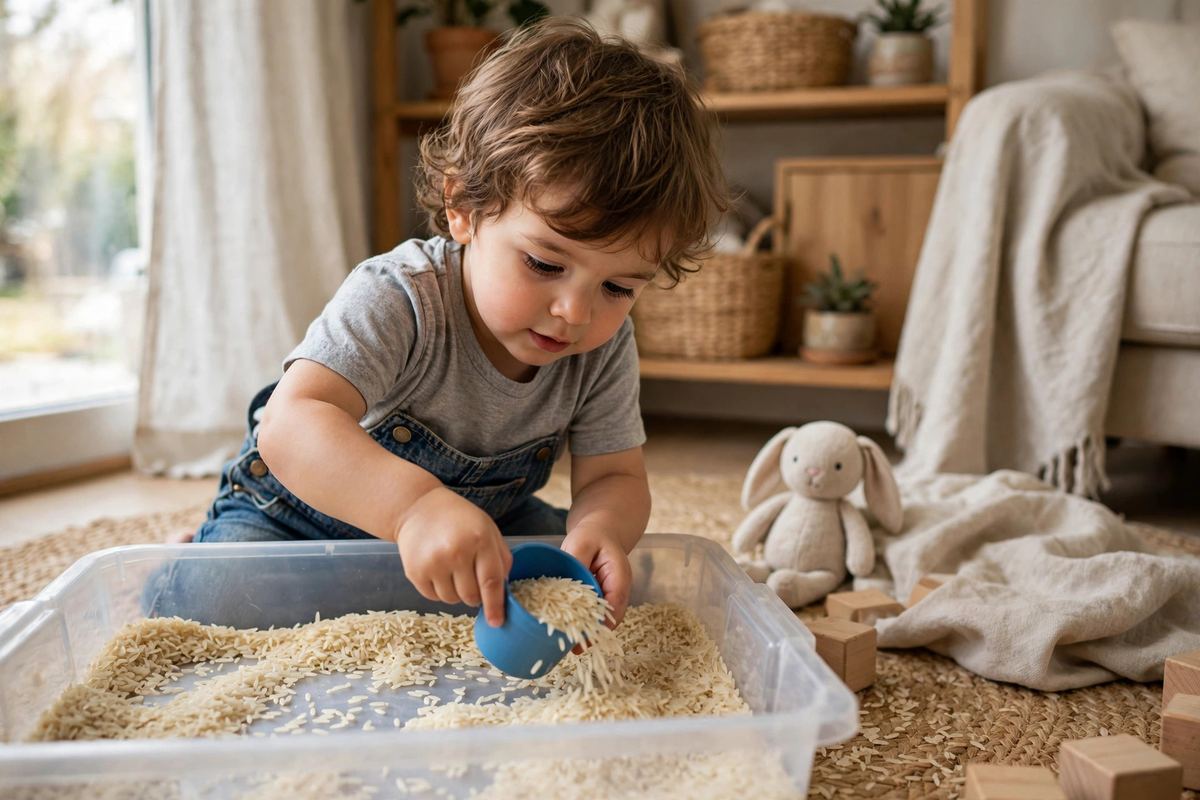
Sensory play activities are any activities that invite a toddler to explore with their senses: the feel of dry rice running through fingers, the sound of water pouring, the smell of cinnamon play dough. It is not a lesson — it is exploration. While they play, toddlers are building hand strength, learning words like "soft," "cold," "rough" and "sticky," and practicing focus. It is also genuinely calming: many toddlers settle down after ten minutes in a sensory bin.
You do not need a special sensory table. A baking tray, a shallow storage bin or even a roasting pan works. Put a towel or shower curtain underneath and cleanup takes two minutes. If you want a ready-made starting point, our sensory bins guide walks through bases, tools, and themes step by step.
16 sensory play activities for toddlers, by sense
Touch
Touch is where sensory play starts. These five setups use bases your toddler can squeeze, pour, and dig through — and every one builds hand strength for later skills like holding a crayon. For more ideas in this group, see our fine motor activities guide.
1. Dry rice treasure dig
Fill a bin with dry rice, hide a few small toys, and hand your toddler a cup and spoon. They dig, pour and find the treasures. Ages: 2–3. Note: supervise closely — rice is small and toddlers put things in their mouths.
2. Homemade play dough
Mix 1 cup flour, 1/2 cup salt, 1 cup water, 1 tablespoon oil and a few drops of food coloring; cook on low heat, stirring, until it forms a ball. Add cinnamon or vanilla for smell. Toddlers can squish, roll, poke with fingers and cut with a plastic knife. Storage: sealed bag in the fridge, good for about a week.
3. Cloud dough (flour + oil)
Mix 4 cups flour with 1/2 cup vegetable oil until it holds together when squeezed. It feels like soft sand and molds beautifully with cups and molds. Messy but easy to sweep up. Ages: 2–3, supervised.
4. Texture walk
Lay out a path of different textures on the floor: a towel, a sheet of bubble wrap, a baking tray with a little water, a piece of sandpaper (taped down), a soft rug. Walk across it barefoot together and name what each step feels like: "soft, bumpy, cold, scratchy."
5. Nature tray
Collect leaves, pinecones, smooth stones and sticks on a walk, then bring them home in a tray. Your toddler sorts them, stacks them and feels each one. Talk about what you found: "This leaf is smooth. This stone is cold."
Sight
Visual sensory play is the calm corner of the senses. These two setups hold attention without any mess at all, which makes them perfect for quiet time or the car.
6. Sensory bottles
Fill a clear plastic bottle with water, a spoonful of glitter, and a few small objects — beads, buttons, tiny plastic animals. Glue the lid shut. Your toddler shakes it and watches everything swirl and settle. Make a second one with oil and water for slow, floating blobs. Tip: keep one in the car for waiting rooms.
7. Shadow play with a flashlight
Dim the room, point a flashlight at a blank wall, and make shadows with your hands or toys. Move the light closer and further away and watch the shadows grow and shrink. Your toddler can hold the flashlight while you make the shapes — or the other way around. Ages: 2–3.
Sound
Sound play builds listening — the skill behind following directions and learning new words. All three of these use things from your kitchen, and all three are loud, so save them for the daytime.
8. Homemade shakers
Put a spoonful of dry rice, beans, or pasta into a small plastic bottle or container and tape the lid shut. Make two or three with different fillings and let your toddler shake them to music. Ask, "Which one is louder?" and let them compare. Note: tape the lids well — a spilled shaker is a ten-minute cleanup.
9. Sound tubes
Take three cardboard tubes (from paper towels or wrapping paper) and fill each with a different amount of dry rice. Tape both ends shut. Your toddler shakes each tube and listens: one is quiet, one is loud, one rattles. Line them up from softest to loudest together. Skills: listening, comparing, early math words like "more" and "less."
10. Listening walk
Go for a short walk — around the house or outside — and stop every few steps to listen. "What can you hear? A bird? The clock? Water running?" Name each sound together. You can play the same game indoors with eyes closed: clap once, then ask where the sound came from. Ages: 2–3. Mess: none.
Smell & Taste
Smell and taste are the senses parents worry about most, and they are the easiest to get wrong. Keep everything taste-safe (see the section below), start with kitchen spices and real food, and let your toddler sniff and taste on their own terms.
11. Scented spice painting
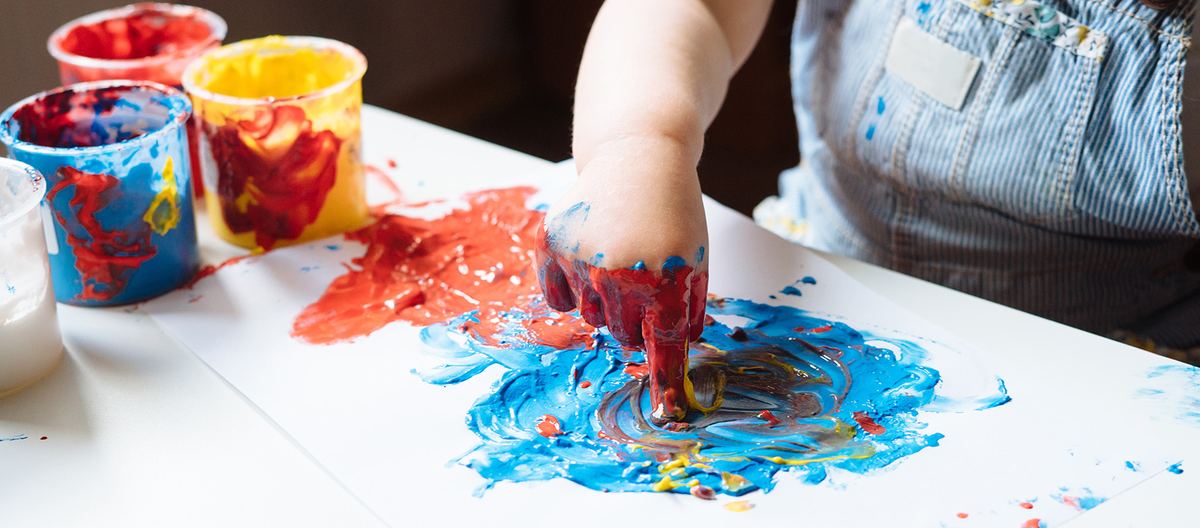
Add a pinch of cinnamon to brown paint, cocoa to dark paint, or a drop of vanilla to white paint. Finger painting becomes a smell activity too. Use washable paint and an old shirt.
12. Scent bottles
Put a cotton ball in a small jar and add a few drops of vanilla, a pinch of cinnamon, or a squeeze of lemon. Make three or four jars with different scents, then let your toddler sniff each one and guess: "Is it the sweet one or the spicy one?" Keep the jars open only while you are watching, and store them out of reach afterwards.
13. Taste test game
Put tiny pieces of four foods in small cups: something sweet (banana), something sour (a lemon wedge to lick), something salty (a cracker), and something crunchy (a cucumber slice). Let your toddler taste each one and tell you what they think. There are no wrong answers — "yucky" is a perfectly good taste word. Note: check for food allergies first, and keep portions tiny.
14. Food play: squish and sort
Cooked spaghetti, mashed potato, and soft peas make a perfect taste-safe sensory base. Let your toddler squish the spaghetti, sort the peas by hand, and mash the potato with a fork. It is messy, but it is also the fastest way to make a new food familiar — children who play with food are more willing to taste it later. Lay a shower curtain under the high chair and let them get stuck in.
Movement & Balance
Movement is a sense too — it is how toddlers learn where their body is in space. These two water activities build balance and coordination, and they are the ones toddlers ask for again and again. For the full version of the first one, see our water play activities.
15. Water pouring station
A shallow bin with a few inches of water, cups, jugs and a sponge. Pouring from one container to another is the classic sensory activity for a reason: it teaches full and empty, heavy and light, and it holds attention for ages. Add a drop of food coloring or a few plastic animals. Always stay within arm's reach.
16. Ice cube melt
Freeze small toys in ice cubes overnight. In the morning, give your toddler the cubes in a bin with a little warm water and a spoon. They watch the ice melt and free the toys. A great hot-day activity, and it teaches cold, melting and patience.
How to set up a sensory bin in 5 minutes
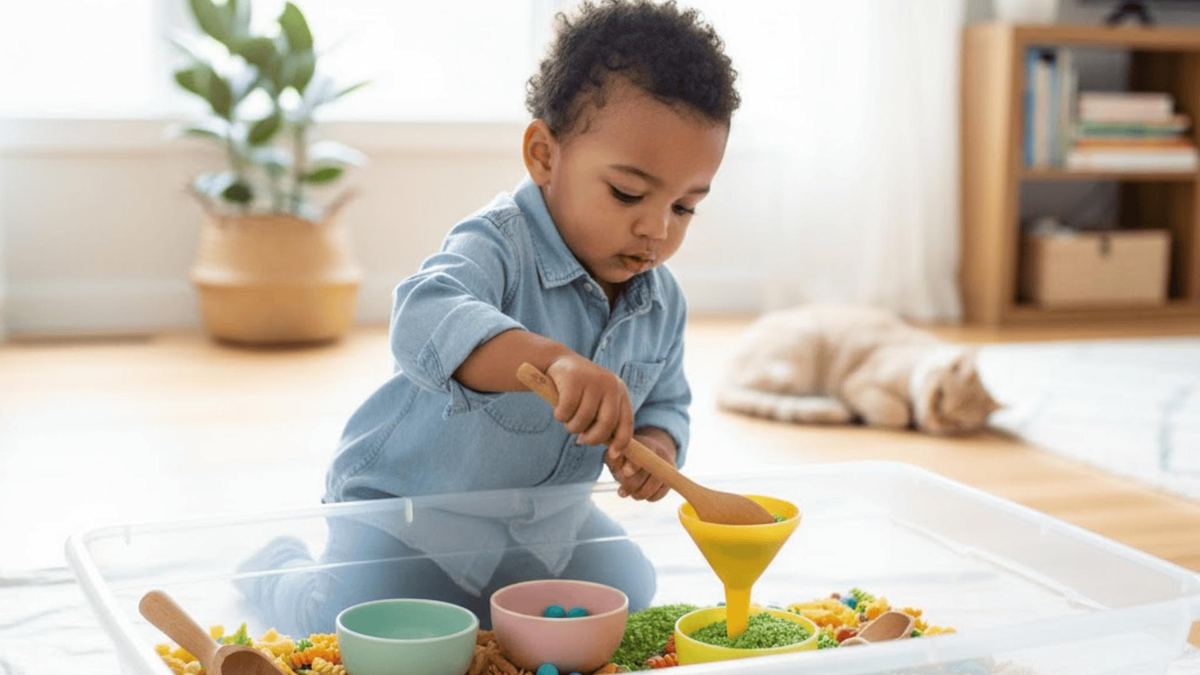
- Pick a base: dry rice, dry pasta, water, play dough, kinetic sand or shredded paper.
- Pick 2–3 tools: cups, spoons, tongs, funnels, small bowls.
- Add 3–5 "treasures" to find: animals, cars, shells, large buttons.
- Put a towel underneath and set a simple rule: "the rice stays in the bin."
- Let them play. Narrate what they do — "You poured the rice! It is full!" — but do not direct it.
Sensory play by age
| Age | Best bases | Watch out for |
|---|---|---|
| Age 1 | Water, cooked spaghetti, soft play dough | Everything goes in the mouth — use taste-safe bases only |
| Age 2 | Dry rice, water, play dough, cloud dough | Small pieces; supervise closely |
| Age 3 | Kinetic sand, ice, slime (supervised), nature trays | They can handle smaller tools like tongs and funnels |
Mess-free sensory play
Some days you need sensory play without the cleanup. The best mess-free options are the ones where everything stays sealed or dry: sensory bottles, shakers, and sound tubes all work with the lid on, and a listening walk needs nothing at all. For painting without the mess, squeeze washable paint into a zip bag, seal it, tape it flat to the table, and let your toddler push the paint around with their fingers — all the squish, none of the stains.
A texture walk with shoes on, or a tray of large dry pasta to sort with hands, gives you touch play that sweeps up in one minute. Keep one mess-free setup ready in a bag by the door: a sensory bottle, a shaker, and a sticker sheet will cover a restaurant, a waiting room, or a rainy afternoon without a single spill.
Taste-safe materials + safety
Under age 2, assume everything goes in the mouth. Taste-safe bases are water, cooked spaghetti, mashed foods, plain play dough, and yogurt — if it goes in the mouth, nothing bad happens. Save dry rice, dried beans, kinetic sand, small beads, and water beads for age 2 and up, with an adult watching the whole time.
Use the toilet-roll-tube rule: if a piece fits through a toilet paper tube, it is too small for a toddler. Keep the lids glued on sensory bottles and shakers so nothing shakes loose. Never leave a toddler alone with water, even a shallow bin — stay within arm's reach. And check for allergies before any food play: a taste test with lemon, banana, and crackers is only fun when you know the foods are safe for your child.
Sensory play and sensitivities
Some toddlers love getting messy. Others hate sticky hands, wet sleeves, or the sound of a shaker, and that is normal. If your child pulls away from a texture, do not push it. Offer a tool instead — a spoon, a brush, or a cup — so they can play without touching, or switch to a dry base like rice or pasta. Let them watch first: a child who watches for a few minutes before joining in is still learning. If strong reactions to everyday textures, sounds, or touch keep coming up, or you are worried, talk to your pediatrician — they can tell you what is typical and what deserves a closer look.
When sensory play is not working
Some toddlers hate sticky hands or wet sleeves — that is fine. Offer a tool (a spoon, a brush) so they can play without touching, or switch to a dry base like rice. Never force a child to touch a texture. Sensory play should feel safe and fun, and a child who watches for a few minutes before joining in is still learning.
Frequently asked questions
What age can toddlers start sensory play?
From age 1, with taste-safe bases only: water, cooked spaghetti, and soft play dough. At age 2 you can add dry rice, cloud dough, and play dough with small tools. At age 3, toddlers can handle kinetic sand, ice play, and smaller tools like tongs and funnels. Whatever the age, stay close and keep pieces big enough that your toddler cannot swallow them.
Is sensory play messy?
It can be, but it does not have to be. Put the bin on a towel or in an empty bathtub, use one base at a time, and keep a lid on the bin when play is over. If you need zero mess, try the mess-free options above: sensory bottles, shakers, zip-bag painting, and listening walks all give you sensory play with nothing to clean up.
What if my toddler eats the sensory bin fillers?
For children under 2, use taste-safe bases only — water, cooked spaghetti, mashed foods, plain play dough. For older toddlers, supervise closely and use the toilet-roll-tube rule: anything that fits through the tube is too small. If your toddler keeps mouthing dry rice or beans, switch to a bigger base like large dry pasta or water play until they are older.
How long should sensory play last?
Most toddlers play for 10 to 20 minutes before they lose interest, and that is a full session. Some days it is 5 minutes, some days it is 30. Stop while it is still fun, put the lid on the bin, and try again tomorrow — toddlers learn more from repeating a favorite setup than from a brand-new one every day.
Can sensory play help with picky eating?
Food play can help a new food feel familiar — squishing cooked spaghetti or sorting peas makes the food less strange, and children who play with food are often more willing to taste it. It is not a fix on its own, and it works slowly, over weeks. If you are worried about your child's eating, talk to your pediatrician.